


How to Choose the Right Concrete Freestanding Bathtub (Dimensions, Shapes & Design Guide)
Designing a bathroom today is less about filling a space and more about shaping how it feels.
In warmer climates, bathrooms are no longer tucked-away utility spaces. They are open, considered, and often one of the most design-led rooms in the home. Materials need to handle heat, humidity, and indoor–outdoor transitions without losing their finish or structure over time.
That is where a concrete freestanding bathtub becomes relevant. Not as an extra, but as the element that anchors the entire space while performing reliably in these conditions.
If you are choosing between styles, sizes, or considering a custom bathtub, here is how to think about it properly so the result works both visually and functionally long after the renovation is complete.
Start with the Size — Because This Is Where Most Decisions Go Wrong
Before shape, before finish, before anything visual — size matters more than people expect.
Both of our concrete freestanding bathtubs are designed in a standard size of 71" L × 31.7" W × 22" H, proportions that work especially well in modern US homes.
This size sits within what many designers consider the ideal range for a primary bathroom. It is long enough to feel substantial and comfortable, but not so oversized that it overwhelms the room.
In larger homes and more open layouts, anything smaller can start to feel under-scaled. This proportion also works especially well in bathrooms designed for brighter, warmer environments, where the space often feels lighter and more expansive.
A premium freestanding tub should never feel squeezed in or visually disconnected from the room. It should feel like it belongs exactly where it sits.
Shape Changes the Entire Mood of the Room
Once the size works, the real decision becomes shape. And this is less about preference and more about what kind of space you are trying to create.
A Softer, More Relaxed Space — Cappadocia
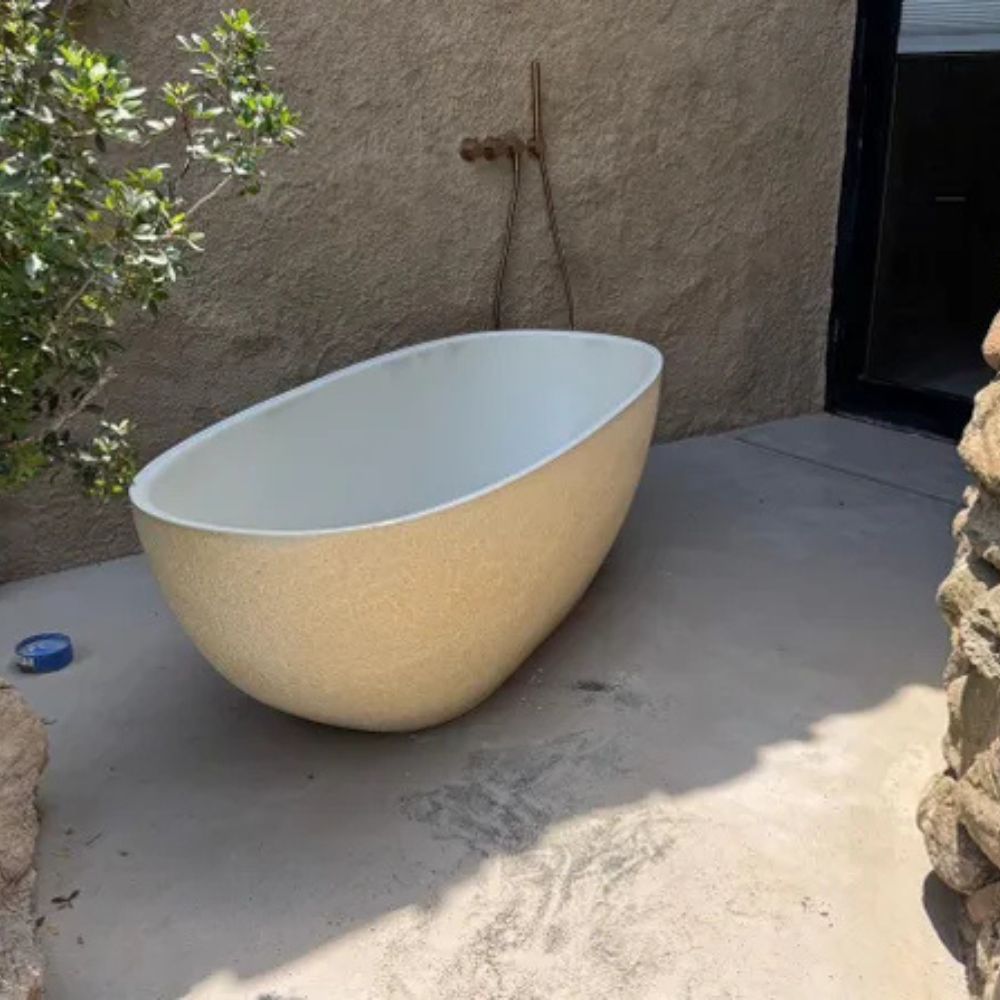
If the goal is a bathroom that feels calm, minimal, and easy to live with, a curved form works best. That is exactly where Cappadocia fits in.
It has a smooth, rounded silhouette that naturally softens the room. Nothing about it feels forced or overdesigned. It works especially well in spaces with neutral tones, natural materials, and softer lighting. In homes where the bathroom leans toward a spa-like feel, this handcrafted stone bathtub quietly does its job.
A Stronger, More Architectural Statement — Gordion
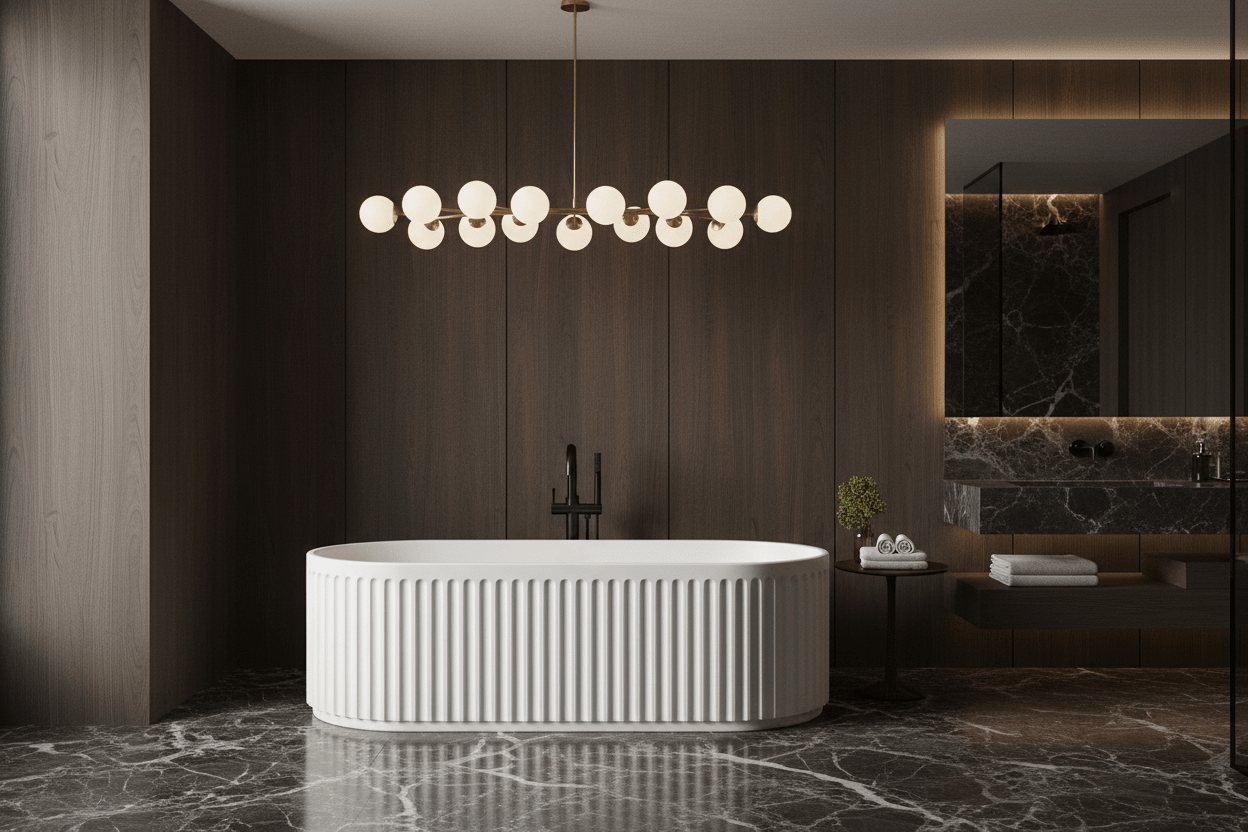
Then there are bathrooms that need a bit more presence. Clean lines, sharper edges, and materials that feel more intentional. That is where Gordion comes in.
With its fluted exterior and sculptural form, it does not blend into the background. It gives the room structure and texture — especially in larger bathrooms where a simpler tub might get lost. This works particularly well in modern homes in Texas, architectural interiors in Arizona, and high-contrast or design-forward spaces. It is less about softness and more about clarity in design.
Why Concrete Works So Well in These Spaces
There is a reason more high-end homes are moving toward concrete freestanding bathtubs. It is not about trends. It is about how the material performs in real environments.
Concrete has a natural matte finish that sits comfortably alongside other premium materials. It does not reflect excessive light or feel overly polished. Instead, it adds depth and a grounded presence to the space.
This becomes especially important in bathrooms designed for brighter, warmer environments or open layouts. The material holds its character without feeling harsh, and it pairs easily with both lighter palettes and more architectural finishes.
It is also practical. Each tub is made from GFRC (glass fiber reinforced concrete), which means it is durable without being excessively heavy. It is suitable for both indoor and outdoor use and resists weather, UV exposure, and daily wear. Whether placed in a primary bathroom or a covered outdoor setting, it performs consistently over time.
Thinking About a 2-Person or Custom Bathtub?
A 71-inch tub works for many homes, but not all.
If the layout is larger, more open, or designed for shared use, a custom bathtub becomes the better option.
We offer custom sizes, shapes, and finishes that allow you to move beyond standard dimensions, create a true 2-person bathtub, and match the material to your overall design palette.
Our 2-person bathtub is currently in development, with expected dimensions ranging from 78 to 83 inches in length and 42 to 48 inches in width. It is designed for two bathers to recline comfortably from opposite ends, with forms that follow the same design language as Cappadocia and Gordion.
In higher-end homes, this is becoming less of a luxury add-on and more of a considered design decision. When everything else in the space is tailored, the bathtub should not feel like a compromise.
Small Details That Actually Make a Difference
Beyond shape and size, there are a few details that quietly elevate the experience:
- Finish options: smooth or textured, low or high gloss
- Color choices: white, cream, gray, or fully custom
- Pre-cut drain + plumbing-ready base: simplifies installation
- Handcrafted texture: no two tubs are exactly identical
These are not always the first things people look at. But they are the things that make the tub feel considered once it is in place.
So Which One Should You Choose?
If your space leans softer, lighter, and more relaxed — Cappadocia will feel natural.
If your bathroom needs structure, texture, and a stronger focal point — Gordion will likely feel more aligned.
And if neither feels quite right because your space is unique, that is usually a sign to explore a custom concrete bathtub — or wait for our upcoming 2-person tub if scale is what you need.
Final Thought
A bathtub is one of the few elements in a home that blends function with experience. You use it. But you also feel it.
A well-chosen concrete freestanding tub — handcrafted, proportioned correctly, finished with intention — does more than fill a space. It defines how that space lives day to day. And in a well-designed bathroom, that difference is immediately noticeable.
Related post
21
May
25
Mar
River Art Stone News & Blogs
How to Choose the Right Concrete Freestanding Bathtub (Dimensions, Shapes & Design Guide)
Read more
25
Mar
River Art Stone News & Blogs
The Material That's Changing How Architects Design Luxury Bathrooms
Read more
23
Jan
River Art Stone News & Blogs
Commercial Planters for US Offices: Boost Performance, Wellbeing, and Brand with Biophilic Design
Read more
17
Jan


