

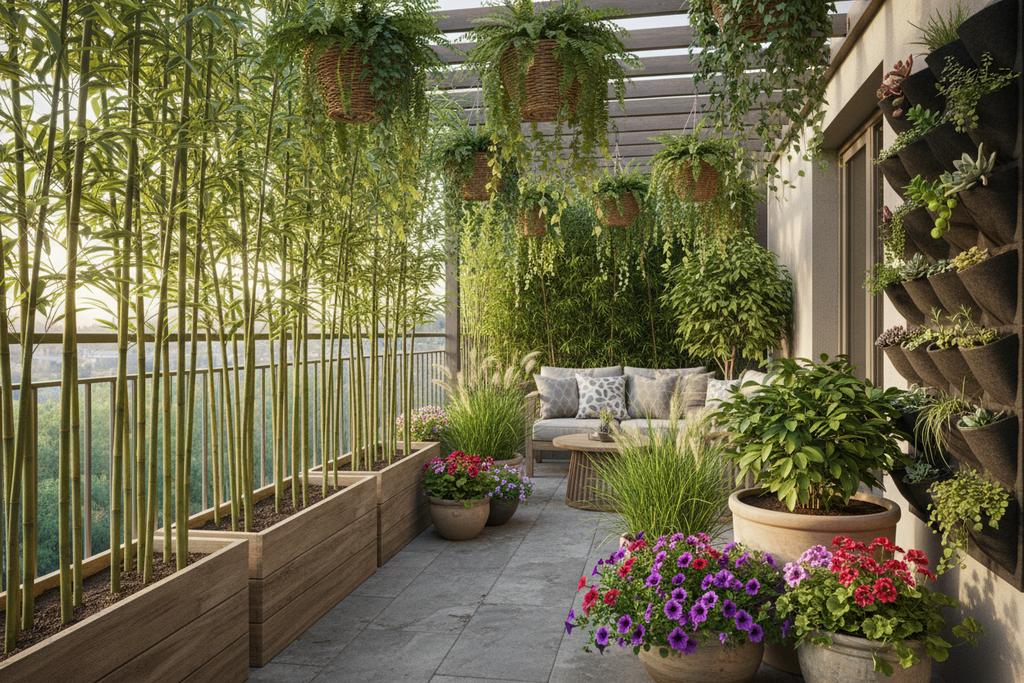
How to Create Privacy on a Balcony or Patio Using Plants and Planters
Privacy is one of the first things people want from a balcony or patio and one of the hardest things to get right.
In apartments, balconies are often overlooked by neighbors, exposed to nearby buildings or open to busy streets. In restaurants and cafés, outdoor seating needs separation without feeling boxed in. The challenge is the same in both cases: creating a sense of enclosure without blocking light, airflow or flexibility.
Plants and planters solve this problem better than almost any permanent structure. When done properly, they offer privacy, soften hard edges and improve how the space feels and functions. When done poorly, they become unstable, high-maintenance or visually cluttered.
This guide focuses on what actually works for homes, balconies, patios and commercial spaces without the lifestyle fluff.
Why Plants Work Better Than Screens or Fences
Fixed privacy solutions like walls, screens or fencing come with trade-offs. They block light, restrict airflow and are difficult (or impossible) to change once installed. In many apartment buildings, they’re not even allowed.
Plants, on the other hand, create visual privacy without full obstruction. They move, breathe and adapt. They also allow you to control height, density and layout over time.
For commercial spaces, this flexibility matters even more. Restaurants reconfigure seating. Offices redesign outdoor break areas. Hotels adjust layouts seasonally. Outdoor Planters allow privacy without locking the space into a single use.
Start With the Right Privacy Strategy
Before choosing plants or planters, define what kind of privacy you actually need.
-
Visual privacy: blocking direct sightlines from neighbors, streets or nearby tables
-
Partial separation: creating zones without full enclosure
-
Noise buffering: softening sound, not eliminating it
-
Psychological privacy: making the space feel sheltered, even if it’s not fully hidden
Most balconies and patios don’t need total coverage. They need height, repetition and density in the right places.
The role of planters and where most people go wrong
Plants don’t create privacy on their own. Planters do.
Small, lightweight pots look fine on social media but fail in real spaces. They tip over in wind, dry out too quickly and don’t support the kind of plant growth needed for screening.
For privacy, planters need to do three things:
-
Provide enough depth for root growth
-
Add weight and stability
-
Create consistent height across a line or edge
This is why larger planters outperform rail boxes and decorative containers when privacy is the goal.
Best Planter Types for Balcony and Patio Privacy
1. Long Rectangular Planters
These are the most effective option for privacy.
They create a continuous visual barrier, are easy to align along railings or edges and support taller plants. In restaurants and cafés, they double as subtle space dividers between tables or seating zones.
They also justify bulk ordering — consistency matters more than variety when creating a clean line of sight.
2. Tall Square or Cube Planters
Best for corners, entry points or areas where you need vertical emphasis.
Used in pairs or sequences, they work well for framing views while blocking unwanted ones. In commercial spaces, they’re often used to guide movement or define seating without signage.
3. Round Planters (With Caution)
Round planters work best as accents, not primary privacy barriers.
They can soften layouts but are harder to align and less efficient when screening long edges. Use them to fill gaps, not create structure.
Choosing plants that actually create privacy
Privacy plants need to grow up, not out and they need to tolerate containers.
Here are plant categories that work consistently in US climates:
Evergreen Shrubs
Ideal for year-round privacy.
Examples include boxwood, podocarpus and certain types of juniper. These work well on balconies with good light and patios exposed to the elements.
Grasses and Vertical Growers
Ornamental grasses, bamboo varieties (clumping only) and upright foliage plants offer movement and partial screening.
They’re especially effective where full blockage isn’t needed, such as between restaurant tables or adjacent balconies.
Large-Leaf Plants
Plants with broad leaves create visual privacy faster, even at lower heights.
These work well indoors, on covered patios or in warmer climates where wind exposure is limited.
Balcony privacy: Residential realities to consider
Balconies come with unique constraints:
-
Wind tunnels between buildings
-
Reflected heat from glass and concrete
-
Limited drainage options
-
Weight restrictions
This is why planter material and size matter more than plant choice.
Deep planters retain moisture longer, support healthier roots and prevent plants from becoming top-heavy. Lightweight decorative pots often fail here, especially above ground level.
If privacy is your goal, choose fewer planters — but choose better ones.
Patio privacy for restaurants and cafes
Outdoor dining areas face different pressures:
-
Constant foot traffic
-
Daily cleaning
-
Rearranged layouts
-
Compliance and safety concerns
Plants need to survive neglect as well as care.
Commercial patios benefit from planters that are:
-
Heavy enough to stay put
-
Durable under frequent movement
-
Easy to clean
-
Consistent in finish and size
This is where larger, commercial-grade planters outperform residential options. They look intentional and age better under use.
How height and spacing affect privacy
More plants don’t always equal more privacy.
A few principles that work:
-
Eye-level coverage matters more than total height
-
Even spacing looks calmer than random placement
-
Repetition creates structure
For balconies, Modern planters spaced evenly along the railing often work better than clustering. For patios, parallel rows or perimeter placement maintains openness while still defining space.
Drainage and maintenance: Why it matters long term
Poor drainage leads to plant failure, which leads to lost privacy.
Planters used for screening should always allow excess water to escape. In indoor or covered spaces, this means pairing planters with trays or liners.
From a maintenance standpoint, stable planters reduce replacement costs. Plants grow better, need less intervention and look intentional longer.
This matters whether you’re managing one balcony or twenty restaurant tables.
Privacy that feels designed, not temporary
The best privacy solutions don’t draw attention to themselves.
When planters are sized correctly, aligned cleanly and planted with intention, they disappear into the space. What people notice instead is comfort, the feeling of being slightly removed from what’s around them.
That’s what plants do best when they’re specified properly.
Conclusion:
Privacy on a balcony or patio isn’t about hiding. It’s about control.
Plants and planters offer one of the few solutions that scale across apartments, restaurants and commercial spaces without permanent construction. But they only work when treated as part of the space — not an afterthought.
Whether you’re creating a private corner at home or designing an outdoor seating area that needs to work every day, the right planters make the difference.
FAQs: Balcony and patio privacy with plants
1. What are the best plants for balcony privacy?
Plants that work best for balcony privacy grow upright, tolerate containers and hold their structure. Evergreen shrubs, clumping grasses and certain climbing plants are commonly used. The right choice depends on sun exposure, wind and local climate.
2. How can I make my balcony private without drilling or permanent fixtures?
Freestanding planters placed along railings or in corners are one of the most effective renter-friendly options. Taller planters raise the plant line and create privacy without attaching anything to the building.
3. How many planters do I need for privacy on a balcony or patio?
In most cases, fewer larger planters work better than many small ones. Two to four well-sized planters placed strategically often provide more privacy than multiple lightweight pots.
4. What size planter is best for privacy plants?
Larger planters support deeper roots, denser growth and better stability. Small pots dry out quickly and rarely allow plants to grow tall or full enough for screening.
5. Do planters need drainage for privacy plants?
Yes. Privacy plants are typically larger and stay in planters long term. Without proper drainage, roots fail and plants decline, which defeats the purpose of screening.
6. What works better for restaurant patio privacy: plants or screens?
Plants offer more flexibility. Planters can be moved, layouts adjusted and seating reconfigured without permanent construction. This is why plants are widely used in restaurant and café patios.
Read More: GFRC Planters: Best Large Outdoor GFRC Planters for Commercial Buildings (2026 Guide)
Related post
21
May

25
Mar
River Art Stone News & Blogs
How to Choose the Right Concrete Freestanding Bathtub (Dimensions, Shapes & Design Guide)
Read more
25
Mar
River Art Stone News & Blogs
The Material That's Changing How Architects Design Luxury Bathrooms
Read more
23
Jan
River Art Stone News & Blogs
Commercial Planters for US Offices: Boost Performance, Wellbeing, and Brand with Biophilic Design
Read more
17
Jan


